How I can help
You don’t have to face these challenges alone.
I understand that everyone’s journey is different. Whether you are seeking counselling to explore emotional and psychological difficulties or mentoring to develop confidence, direction and practical strategies, I offer a supportive and collaborative space tailored to your individual needs.
With the right support, understanding and practical tools, it is possible to develop greater self-awareness, build confidence, establish healthier boundaries and move towards meaningful and sustainable change.
As an Integrative Counsellor and Mentor, I draw on a range of therapeutic and developmental approaches, depending on your individual needs. In counselling, this may include Person-Centred Therapy, Cognitive Behavioural Therapy (CBT), Psychodynamic, Solution-Focused, Existential and Gestalt approaches. Where clinically appropriate, evidence-based techniques may also be incorporated as part of the therapeutic process.
Through counselling, we can explore your thoughts, emotions, behaviours, relationships and past experiences, and consider how these may be influencing your life today. The aim is not simply to focus on difficulties, but to help you develop greater self-awareness, recognise your strengths and gain a deeper understanding of what may be affecting your wellbeing and preventing you from moving forward.
Through mentoring, the focus is more developmental and goal oriented. We can work together to identify your goals, explore your strengths, build confidence, consider your options and develop practical steps towards the changes you would like to make. Mentoring can provide encouragement, structure, accountability and guidance as you work towards your personal or professional goals.
My aim is to provide a safe, respectful and non-judgemental space where you can feel heard, supported and empowered to make choices that are right for you.
Our work together can help you to:
Every person is different, so there is no one-size-fits-all approach. Our work will be tailored to your individual needs, goals, pace and preferences. You will remain actively involved in deciding what we focus on and how we work together.
Whether you come to counselling to better understand yourself and your experiences, or to mentoring to develop confidence, direction and practical goals, my aim is to provide a safe, respectful and empowering space where you can feel heard, supported and encouraged to move forward.
My role is to walk alongside you, offering a listening ear, support and encouragement as you explore what matters to you. Together, we can build your confidence, understanding and practical skills, helping you find what works best for you and take positive steps towards the changes you would like to make. There is no pressure to have everything figured out — we can take things one step at a time, at your own pace.
The foundation of our work
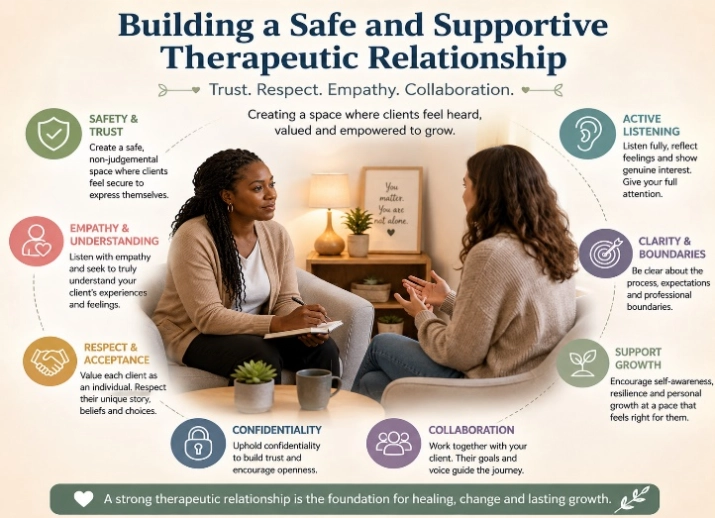
Building a safe and supportive therapeutic relationship
A safe and supportive therapeutic relationship provides the foundation for meaningful counselling. When clients feel heard, respected, accepted and understood, they may feel more able to explore difficult experiences, develop self-awareness and consider positive changes. Rogers, C.R. (1957) highlighted the importance of empathy, congruence and unconditional positive regard within the therapeutic relationship, emphasising the conditions that can support clients in exploring themselves and experiencing therapeutic change.
The counsellor’s role is not to control or direct the client’s life, but to walk alongside the client, providing professional support, appropriate boundaries, and a safe space for exploration. Through empathy, respect, collaboration, acceptance, and ethical practice, the therapeutic relationship can support clients in developing a greater understanding of themselves, recognising their strengths, and making their own informed choices.
The therapeutic relationship should be a professional partnership built on trust, respect and compassion, where the client’s wellbeing, dignity, autonomy and individual needs remain at the centre of the counselling process.

Counselling & mentoring
Low self-esteem and confidence
Low self-esteem can affect how you see yourself, your relationships and the choices you make in everyday life. You may find yourself being overly critical of yourself, doubting your abilities or feeling that you are not good enough. You may compare yourself with others, struggle to recognise your strengths, find it difficult to set boundaries or worry about making mistakes and being judged.
Sometimes, low self-esteem can develop through past experiences, difficult relationships, criticism, rejection, life changes or situations where you may have felt unheard or undervalued. Over time, these experiences can influence the way you see yourself and affect your confidence, motivation and sense of self-worth.
Counselling can provide a safe and supportive space to explore these experiences, understand unhelpful thoughts and patterns, and develop greater self-awareness, self-compassion and confidence. Mentoring can complement this by helping you recognise your strengths, identify your goals and turn your abilities into practical steps towards positive change.
The aim is not to become a different person, but to develop a kinder and more positive relationship with yourself, recognise your strengths and feel more confident in making choices that are right for you.
Signs of low self-esteem
Low self-esteem can look different for everyone. You may recognise some of the following experiences:
You do not need to experience all of these signs to recognise that low self-esteem may be affecting you. Everyone experiences self-doubt from time to time. However, when these patterns become persistent and begin to affect your relationships, choices, confidence or everyday life, talking to a counsellor may provide a helpful opportunity to explore what is happening.
What is confidence?
Confidence is the belief that you can trust yourself, your abilities and your capacity to manage situations, even when you do not know exactly what will happen. Being confident does not mean feeling positive or certain all the time. It is normal to experience doubt, nervousness or uncertainty.
Confidence can also mean being willing to try, learn from experiences and keep going when things do not go as planned. It can develop gradually through experience, self-awareness and recognising your own strengths.
Developing confidence can help you feel more comfortable making decisions, expressing your needs, setting healthy boundaries and taking opportunities that are important to you.
How can confidence help?
Developing confidence can help you to:
How can I help you?
I can offer a warm, supportive and non-judgemental space where you can talk openly about how you see yourself and the challenges that may be affecting your confidence. Through an integrative counselling and mentoring approach, we can explore unhelpful self-beliefs, recognise your strengths and develop practical ways of responding to self-doubt.
Together, we can work towards building greater self-awareness, healthier boundaries and confidence in your own abilities. We will take things one step at a time, at your own pace, focusing on what matters to you and helping you recognise that your thoughts and past experiences do not have to define your future.
You do not have to become a different person to feel more confident. The aim is to develop a kinder and more trusting relationship with yourself, recognise your own abilities and feel more able to make choices that are right for you.
Counselling & mentoring
Work stress and burnout
Work can be an important part of our lives, providing purpose, achievement, connection and financial security. However, ongoing pressure, high demands, difficult working relationships or feeling unable to switch off can gradually affect your emotional and physical wellbeing.
Work stress can leave you feeling overwhelmed, mentally exhausted or unable to cope with the demands around you. You may find that work begins to affect your sleep, relationships, confidence, motivation or enjoyment of life. When stress continues for a long period without enough opportunity for recovery, it can contribute to burnout.

Burnout is more than simply having a difficult or tiring day at work. It can develop when ongoing stress leaves you feeling emotionally and physically drained, disconnected from your work or responsibilities, and less able to feel effective or motivated. The World Health Organization (WHO, 2019) describes burnout as an occupational phenomenon resulting from chronic workplace stress that has not been successfully managed. It is characterised by exhaustion, increased mental distance or negative feelings towards one’s job, and reduced professional effectiveness.
Sometimes, work stress can also be connected to perfectionism, difficulty setting boundaries, taking on too much responsibility, workplace conflict, lack of support or finding it difficult to say no. Understanding what is contributing to your stress can be an important first step towards making positive changes.
Signs of work stress and burnout
Work stress and burnout can affect everyone differently. You may recognise some of the following experiences:
You do not need to experience all of these signs for work stress to be affecting you. Everyone experiences pressure at work from time to time. However, when stress becomes persistent and starts affecting your wellbeing, relationships or everyday life, it may be helpful to seek support.
Understanding work stress and burnout
Work stress can occur when the demands placed upon you feel greater than the resources, support or time you have available to manage them. Sometimes the source of stress may be outside your control, while at other times there may be changes you can make to how you respond to the situation.
Burnout can develop gradually. You may initially notice that you are simply feeling tired or under pressure, but over time you may begin to feel emotionally exhausted, detached or less able to enjoy things that previously mattered to you.
Recognising these changes early can give you an opportunity to pause, reflect and consider what you need. This may include looking at boundaries, workload, expectations, relationships, coping strategies and the balance between work and the rest of your life.
How can I help you?
I can offer a warm, supportive and non-judgemental space where you can talk openly about the pressures you are experiencing at work and how they may be affecting you.
Through an integrative counselling and mentoring approach, we can explore the thoughts, feelings and patterns that may be contributing to your stress. Counselling can provide space to understand your emotional responses, explore difficult experiences and develop healthier ways of coping. Mentoring can complement this by helping you identify practical goals, strengthen confidence, develop boundaries and consider realistic steps towards a healthier and more sustainable approach to work.
Together, we can explore practical ways to:
Every person experiences work stress differently, so our work will be shaped around your needs, goals and what feels most helpful to you. I offer a safe and supportive space where you can explore what is affecting your wellbeing and consider practical ways to feel more balanced.
You do not have to have everything figured out. Together, we can take things at a pace that feels comfortable, helping you build confidence, develop healthier boundaries and find realistic ways to support your wellbeing both at work and in your personal life.

Counselling & mentoring
Making sense of your life
Sometimes life can feel confusing, overwhelming or simply difficult to understand. You may find yourself wondering why you feel a certain way, why the same patterns keep appearing, or what you really want from your life and relationships. Past experiences, changes in circumstances, relationships and the way we see ourselves can all influence how we feel and respond to life today.
Taking time to pause and reflect can help you understand yourself more clearly. Counselling can offer a safe space to explore your thoughts, feelings and experiences, without pressure or judgement. It can help you make sense of what you have been through, recognise patterns that may no longer be helpful and gain a clearer understanding of what matters to you.
Mentoring can complement this by helping you look towards the future. It can support you in identifying your strengths, exploring your goals, building confidence and turning your ideas into realistic steps. Sometimes having someone to listen, reflect with you and help you see things from a different perspective can make it easier to move forward.
How can I help you?
I offer a safe, warm and welcoming space where you can talk openly about what you are experiencing and explore what may be affecting your life. Through an integrative counselling and mentoring approach, we can gently explore your thoughts, feelings, relationships, patterns, values, strengths and goals.
We will also take a good look at your lifestyle and the choices you are making, considering how different areas of your life may be affecting your wellbeing and sense of direction. Together, we can explore what may be working well, what may no longer be helpful or supporting your wellbeing and where you might want to make positive changes.
My role is to work alongside you, offering support, encouragement and a different perspective as you develop a clearer understanding of yourself and what matters to you. Together, we can explore the challenges you may be facing, recognise the strengths you already have and consider practical ways to move forward in a way that feels more manageable, balanced and hopeful.
You do not need to have all the answers when you begin. We can take the time you need to understand where you are now, what is important to you and where you would like to go next. Your experiences, needs and goals are unique to you, and our work will be guided by what feels most helpful and meaningful for you, at a pace that feels comfortable.
Counselling
Depression and low mood
We all experience periods of low mood. You may feel sad, discouraged, worried, tired or less motivated than usual, particularly during difficult or stressful times. Low mood can be a natural response to life’s challenges and may improve with time, support and changes in circumstances.
Low mood is a period when you may feel sad, worried, tired, discouraged or less motivated than usual. It can happen in response to life events, stress, disappointment or difficult circumstances, and it often improves with time, rest, support and positive changes. Low mood is a normal part of life, but when these feelings persist, become more intense or significantly affect your everyday life, it may be helpful to seek support.

Depression is more than experiencing a temporary low mood. It can affect how you think, feel, behave and manage everyday life. You may notice changes in your mood, motivation, sleep, appetite, concentration and enjoyment of things that normally matter to you. Depression can affect everyone differently, and sometimes there may not be an obvious reason for how you are feeling.
Understanding the difference between low mood and depression can be helpful. If difficult feelings continue or begin to affect your everyday life, relationships or wellbeing, having a safe space to talk about what you are experiencing can be an important first step.
How depression and low mood can affect you
You may notice some changes in how you feel or manage everyday life, such as:
You do not need to experience all of these feelings. Everyone’s experience is different, and experiencing some of these signs does not necessarily mean that you have depression. If you are concerned about how you are feeling, speaking with an appropriate healthcare professional can help you understand what may be happening.
Depression can develop for many different reasons. It may be connected to loss, difficult relationships, major life changes, ongoing stress, illness or other challenging experiences. Sometimes, however, there may be no clear explanation. You do not have to understand everything before seeking support.
How can I help you?
I provide a warm, respectful and accepting space where you can talk openly about what you are experiencing and feel listened to without judgement. We can begin with where you are now and gradually explore the thoughts, feelings and experiences that may be affecting you.
As an Integrative Counsellor, I draw from different therapeutic approaches rather than using the same method with everyone. Depending on what feels appropriate for you, we may explore the connection between thoughts, feelings and behaviours through Cognitive Behavioural Therapy (CBT), consider experiences and relationship patterns that may have developed over time through a Psychodynamic approach, or explore identity, meaning, choices and what is important to you through an Existential approach.
We can also step back and consider the bigger picture of your life, including your lifestyle, relationships, work, routines, choices and sources of stress. This can help us understand what may be influencing your wellbeing and where small, realistic changes could make life feel more manageable.
Our work will be collaborative and shaped around you. We can decide together what you would like to explore and which approach feels most helpful. I will listen with empathy, offer support and, where appropriate, gently challenge thoughts or patterns that may be keeping you stuck.
My aim is to help you develop a deeper understanding of yourself, reconnect with the parts of life that matter to you and recognise the strengths you already have. Together, we can work towards greater balance, confidence and a clearer sense of direction.
You do not have to have everything figured out before reaching out. We can start where you are, take things at a comfortable pace and work together towards a way forward that feels right for you.

Counselling
Grief, loss and bereavement
Grief is a deeply personal experience, and there is no single or ‘right’ way to grieve. It is often associated with the death of someone we love, but loss can also involve relationships, health, employment, identity, faith, or hopes for the future.
You may experience sadness, anger, guilt, loneliness, numbness, or uncertainty. Your emotions may change from day to day, and you may sometimes experience several feelings at once. Grief can also affect your sleep, appetite, concentration, relationships, and sense of meaning or direction. The NHS recognises that there is no right or wrong way to feel following bereavement or loss.
Talking about grief and loss can sometimes feel difficult. You may want to talk about what has happened but not know where to begin, or you may find yourself returning to the same thoughts and feelings as you try to make sense of your experience. At other times, you may prefer quiet and space to process your feelings privately.
Whatever your experience, there is no expectation that you should grieve in a particular way or at a particular pace. Counselling can provide a safe, supportive and non-judgemental space where you can explore your feelings, make sense of your experience, and process your loss at your own pace.
You may be experiencing
Grief does not follow a fixed timetable. Whether your loss is recent or something you have been carrying for a long time, having the opportunity to talk can provide space to understand your feelings and adjust to the changes in your life.
How can I help you?
I offer a warm, compassionate and accepting space where you can talk openly about your loss without pressure to move forward before you feel ready.
Together, we can explore what the loss means to you, how it has affected your life and relationships, and what you may need as you adjust. As an Integrative Counsellor, I draw from different therapeutic approaches, including Person-Centred, Psychodynamic and Existential approaches, depending on what feels appropriate for you.
Our work will be guided by your individual needs, preferences and pace. You do not need to have the right words or know exactly what you need from counselling. We can take time to understand your experience and explore ways of moving forward while continuing to acknowledge the importance of what has been lost.
My role is to offer understanding, support and a space where you can express what you are experiencing, reflect on what matters to you and recognise the strengths you already have. Together, we can explore ways of navigating this period of your life that feel manageable and meaningful.
There is no need to have all the answers at the beginning. We can take the journey one step at a time, with space to reflect, understand your experience and find a way forward that feels manageable and meaningful to you.
Counselling
Relationship difficulties
Relationships can bring love, connection and support, but they can also leave us feeling hurt, confused, frustrated or emotionally drained. Difficulties can arise in intimate relationships, friendships, family relationships or the workplace.
You may find yourself caught in repeated arguments, struggling to communicate or feeling that your needs are not being heard. You may also find it difficult to set boundaries, say no, or understand why similar relationship patterns keep appearing in your life.

You may be experiencing
Sometimes, caring for others can become so important that we lose sight of our own needs. Exploring these patterns can help you understand where they may come from, recognise what you need from your relationships and consider healthier and more balanced ways of relating to others.
How can I help you?
I provide a safe, supportive and accepting space where you can explore your relationships openly and feel heard and understood. Together, we can look at communication, boundaries, emotional needs and relationship patterns that may be affecting your wellbeing.
As an Integrative Counsellor, I may draw on Person-Centred, Psychodynamic, Cognitive Behavioural Therapy (CBT) and other appropriate approaches, depending on your individual needs. We can explore how your experiences, beliefs and patterns may influence the way you relate to others today.
You do not need to be in couples counselling to explore relationship difficulties. Individual counselling can provide valuable space to understand yourself, communicate your needs more confidently, establish healthier boundaries and make choices that support your wellbeing.
Our work will be collaborative and centred around what matters to you. Whether you would like to improve a relationship, manage conflict, develop healthier boundaries, understand recurring patterns or build a healthier relationship with yourself and others, we can explore these areas together at a pace that feels comfortable for you.
My role is to support you as you develop greater self-awareness, confidence and understanding in your relationships, while helping you recognise your own needs, values and choices. You do not have to have everything worked out before you begin. We can take the time to understand what is happening and explore a way forward that feels healthier, more balanced and right for you.

Counselling
Trauma and difficult experiences
Trauma and difficult experiences can affect people in many different ways. They may follow a single overwhelming event or develop through experiences such as abuse, neglect, difficult relationships, loss or prolonged periods of feeling unsafe, powerless or overwhelmed. The impact is not always easy to recognise, and people can respond to difficult experiences in very different ways. The NHS recognises that trauma can affect both emotional and physical wellbeing and that people may respond differently to traumatic experiences.
Sometimes, experiences from the past can continue to influence how you feel, think, relate to others or respond to situations in the present. You may understand what happened, but still find that certain feelings, reactions or patterns are difficult to manage.
You may be experiencing
You do not need to have experienced all of these difficulties, and you do not need to fully understand what has happened before seeking support. What matters is how your experiences are affecting you and your wellbeing today.
How can I help you?
I offer a warm, calm and accepting space where you can talk about difficult experiences and explore what you are going through without pressure. Building trust and a strong therapeutic relationship is an important part of our work.
Together, we can gently explore how past experiences may have influenced your thoughts, emotions, relationships and responses to situations today. Where appropriate, we can also look at grounding and coping strategies that may help you feel more settled and manage difficult emotions in everyday life.
We will work at a pace that feels comfortable for you. There is no need to share everything at once or revisit experiences before you feel ready. Your needs, boundaries and sense of safety will remain important throughout our work together.
My role is to support you as you develop greater understanding of yourself, recognise your strengths and reconnect with the resources you already have. We can explore what may help you feel more grounded, confident and able to navigate life in a way that feels more manageable.
You do not need to work through everything at once. We can take the time you need to understand your experiences, explore what feels most important to you and gradually find ways to support your wellbeing and move forward with greater confidence.
More areas I can support you with
Alongside the areas above, counselling and mentoring can also help with the following. Every person is different, so our work is always tailored to you.
Counselling & mentoring
Life transitions & major changes
Life transitions can include changes such as starting or ending a relationship, career changes, bereavement, relocation, becoming a parent, or adjusting to a new stage of life. Even positive changes can bring uncertainty, stress and emotional overwhelm. The American Psychological Association (2020) highlights the importance of resilience in helping people adapt to stressful and life-changing experiences. During times of change, it is natural to experience a range of emotions while adjusting to new circumstances and finding a renewed sense of direction.
Signs
How I can help
I can offer a safe and supportive space to make sense of your experiences, process difficult emotions and explore healthier ways of responding to change. Together, we can work towards greater resilience, clarity and confidence as you navigate the next chapter of your life. Counselling can also help you recognise your strengths, understand what you need during this period of change and explore realistic steps towards creating a future that feels more manageable and meaningful.
Counselling & mentoring
Building healthier coping strategies
Coping strategies are the ways we respond to stress, difficult emotions and challenging situations. Sometimes the strategies we have relied on no longer serve us well, especially when life feels overwhelming or difficult to manage. The American Psychological Association (APA, 2020) highlights the importance of developing healthy ways to manage stress and cope with challenging experiences. Learning new coping strategies can help you feel more in control, understand your emotions and respond to difficult situations in healthier and more manageable ways.
Signs
How I can help
I can offer a safe and supportive space to explore how you currently cope with stress and difficult emotions. Together, we can identify patterns that may no longer be helpful and explore healthier ways to manage your emotions, build confidence and respond to life’s challenges. The aim is to help you develop coping strategies that feel realistic, manageable and right for you.
Counselling & mentoring
PTSD — Post-Traumatic Stress Disorder
PTSD can develop after experiencing or witnessing a traumatic or highly distressing event. Trauma can affect your thoughts, emotions, relationships and sense of safety. The NHS (2023) explains that PTSD can affect how a person feels, thinks and behaves after experiencing or witnessing a traumatic event. Everyone responds to trauma differently, and it is understandable to seek support when difficult experiences continue to affect everyday life.
Signs
How I can help
I can offer a safe and welcoming space where you can talk about your experiences at a pace that feels comfortable for you. Together, we can explore how your experiences may be affecting your thoughts, emotions, relationships and everyday life, and help you make sense of some of the feelings you may be experiencing. We can also explore healthier ways to cope with difficult emotions, triggers and situations that may feel overwhelming, while supporting you to develop greater emotional awareness and a stronger sense of safety. If you would benefit from specialist trauma support, we can also discuss appropriate referral options to help you access the right level of care and support.
Counselling & mentoring
Anxiety & worry
Anxiety is a common emotional response to perceived threat, uncertainty or stress. It is natural to experience worry from time to time, particularly during difficult or uncertain periods in life. However, when anxiety becomes persistent or begins interfering with everyday life, relationships, work or wellbeing, seeking support may be helpful. The NHS (2024) explains that generalised anxiety disorder (GAD) involves feeling worried about a wide range of issues, often with difficulty controlling the worry and associated physical or emotional symptoms. Understanding what may be contributing to your anxiety can be an important first step towards finding healthier ways to manage it.
Signs
How I can help
I can offer a safe, supportive and non-judgemental space where you can talk openly about your worries without feeling judged or rushed. Together, we can explore what may be contributing to your anxiety, understand how it is affecting your thoughts, emotions and everyday life, and identify patterns that may be making things feel more difficult. We can then explore healthier ways to manage anxious thoughts and emotions, build confidence and develop practical coping strategies that feel realistic and manageable for you. My aim is to help you feel more understood, supported and better equipped to navigate situations that may feel overwhelming.
Counselling & mentoring
Boundaries & people-pleasing
Healthy boundaries help us communicate our needs, values and limits while maintaining respectful and balanced relationships. People-pleasing can involve putting others’ needs before your own, often because of a fear of conflict, rejection, disappointing others or being misunderstood. The American Psychological Association (APA, 2024) highlights the importance of healthy communication, assertiveness and maintaining positive relationships, which can support people in expressing their needs while respecting the needs of others. Learning to recognise your own needs and communicate them clearly can be an important part of developing healthier and more fulfilling relationships.
Signs
How I can help
I can offer a safe, supportive and non-judgemental space to explore your relationships, understand your needs and recognise patterns that may be affecting your wellbeing. Together, we can explore what healthy boundaries look like for you and work towards communicating your needs more confidently and respectfully. We can also look at the fears or beliefs that may make it difficult to say “no”, express your feelings or put your own needs first. My aim is to support you in developing healthier relationships while feeling more confident in being yourself, making choices that are right for you and maintaining boundaries without unnecessary guilt.
Counselling & mentoring
Anger & emotional regulation
Anger is a normal human emotion and can sometimes be a response to feeling hurt, frustrated, overwhelmed, threatened or misunderstood. However, when anger feels difficult to manage or begins to affect relationships, work or everyday wellbeing, it may be helpful to explore what is happening beneath the emotion. The NHS (2023) explains that understanding what triggers anger and learning ways to manage it can help people respond to difficult situations more calmly and effectively. Developing greater awareness of your emotions can be an important step towards healthier communication and emotional wellbeing.
Signs
How I can help
I can offer a safe, supportive and non-judgemental space to explore your experiences with anger and understand what the emotion may be underneath. Together, we can identify your triggers, recognise early signs of emotional escalation and explore healthier ways to express difficult feelings. We can also look at how anger may be affecting your relationships, communication and everyday life, while developing practical strategies to help you pause, reflect and respond rather than react. My aim is to support you in understanding your emotions, communicating your needs more effectively and developing healthier ways of managing difficult situations.
Counselling & mentoring
Personal growth & self-discovery
Personal growth involves developing greater self-awareness, understanding your values and recognising patterns that may be affecting your choices, relationships and wellbeing. It can also involve taking time to reflect on what matters to you, what you want from life and the person you would like to become. The British Association for Counselling and Psychotherapy (BACP, 2024) recognises counselling as a process that can support people in gaining greater self-awareness, exploring their experiences and developing a deeper understanding of themselves. Personal growth is not about becoming someone else; it is about developing a stronger understanding of who you are and what is important to you.
Signs
How I can help
I can offer a safe and welcoming space for you to explore who you are, what matters to you and what you want from life. Together, we can reflect on your experiences, identify patterns that may no longer serve you and explore the beliefs, values and choices that shape your everyday life. We can also work towards building greater self-awareness and confidence while helping you gain clarity about the direction you would like to take. My aim is to help you understand yourself more deeply, recognise your strengths and make choices that feel more authentic and meaningful to you.
You are welcome here
Whatever has brought you here today, your story matters, and together we can work towards positive and lasting change.